sexta-feira, 31 de março de 2017

How To Use and Pronounce The Word "Muito" in Brazilian Portuguese


The word "muito" in Brazilian Portuguese can mean many things and that can be confusing, right? You can say "muito", "muita", "muitos" and "muitas". Crazy, huh?

But, there is no need to worry about it! Today, I'll make the uses of "muito" very simple for you to understand and I'll also teach you the correct pronunciation.

1. "Muito" means "a lot"

If you are into grammar, it might be interesting to know that when "muito" means "a lot" it works as an adverb.

Examples:

  • Português é difícil, por isso eu estudo muito. (Portuguese is hard, that's why I study a lot.)
  • Ela trabalha 12 horas por dia. Ela trabalha muito. (She works 12 hours a day. She works a lot.)


2. "Muito" means "very"

It also works as an adverb in this case and it is usually used before adjectives.

Examples:

  • Patrícia é muito bonita. (Patrícia is very pretty.)
  • José é muito bonito. (José is very handsome.)
  • Os brasileiros falam muito rápido. (Brazilians speak very fast.)
  • Esse filme é muito legal. (This film is very cool.)


As you could see there is no variation of "muito" in this case. Regardless of what comes before or after it, we still use "muito". ("muito bonita" and "muito bonito")

3. Muito means "much", "many" or "a lot of"

When we use "muito" to indicate quantity there will be variations in gender and number.
feminine - muita                         feminine plural - muitas
masculine - muito                       masculine plural - muitos

Examples:

  • Compramos muitas frutas na feira. (We bought many fruits at the market)
  • Vocês compraram muitos pães? Temos muitos pedidos de sanduíche hoje. (Did you buy a lot of bread. We have many orders of sandwich today.) Attention! The word "bread" in Brazilian Portuguese has a plural form. pão - pães
  • Você tem muita paciência com crianças. (You've got a lot of patience with children)
  • Esse bolo está doce demais. Você deve ter colocado muito açúcar. (This cake is too sweet. You must have put a lot of sugar)
Important! When you use the verb "gostar" and "muito" you should use the following order:
gostar + muito + de + the thing you like
We do that because the verb "gostar" is followed by the preposition "de" to refer to the thing which we like.

Examples:
Eu gosto muito de viajar. 
Eu não gosto muito de ler.
Gosto muito de você, leãozinho. (As in Caetano Veloso's song.)

It's also very important that you learn the pronunciation of the word "muito", so watch the video below.

How about making a video with you saying some sentences with the word "muito"?

If you have any questions, feel free to leave your comments below.

Até a próxima!


quarta-feira, 22 de março de 2017

Learn Brazilian Portuguese With the Song "Águas de Março" By Tom Jobim


March is almost over and I accidentally found an article of the magazine Rolling Stone that talks about the Brazilian song "Águas de Março", one of the most beautiful songs ever made. The name of the song in English is "Waters of March" and that's why I think it's the perfect time to create an activity with it.
The article explains what the song means, so let's start this activity by reading an excerpt of the article.

1. Leia o parágrafo abaixo e responda à pergunta abaixo.
 "Águas de Março" descreve um momento típico da estação das chuvas no Brasil, o mês de março, que marca o fim desse período no verão, de chuvas torrenciais e ventania. Passa a ideia de que tudo está molhado e relata o cotidiano, usando elementos da flora, da fauna, do folclore e de brasilidade, reforçados pela presença de palavras como toco, pau, pedra, pesca, regato, fonte, chuva, céu, sol, garrafa de cana, festa da cumieira, lama, mormaço, sapo, rã, passarinho, peixe, anzol, estrada, estrepe, prego, peroba, o Matita Pereira. 

a) O que acontece no mês de Março no Brasil?


2. Agora escute a música e complete a letra usando as palavras abaixo.
[anzolvidrosozinho, madeira, pau]


É o _____________, é a pedra, é o fim do caminho
É um resto de toco, é um pouco ____________
É um caco de ________, é a vida, é o sol
É a noite, é a morte, é um laço, é o _________
É peroba no campo, é o nó da ___________
Caingá candeia, é o matita-pereira
3. Continue escutando a música e coloque as frases na ordem correta. Use os números de 1-8.
(  ) É o mistério profundo, é o queira ou não queira
(  ) É a chuva chovendo, é conversa ribeira
(  ) É a viga, é o vão, festa da ciumeira

(  ) É o vento ventando, é o fim da ladeira
(  ) É madeira de vento, tombo da ribanceira
(  )É o pé, é o chão, é a marcha estradeira
(  )Das águas de março, é o fim da canseira
(  ) Passarinho na mão, pedra de a tiradeira

4. Keep listening to the song and now focus your attention on the words that finish with the letter M. Notice the M is not pronounced the same way as in English. You should not close your lips to produce this sound. It's just like when we have the letter N at the end of a word.
É uma ave no céu, é uma ave no chão
É um regato, é uma fonte, é um pedaço de pão
É o fundo do poço, é o fim do caminho
No rosto um desgosto, é um pouco sozinho
5. A música ainda não acabou. Continue escutando e complete os espaços com as palavras abaixo. 
[conto, brilhando, gesto, ponta, estilhaço, manhã, chegando, lenha]
É um estepe, é um prego, é uma _____________, é um conto
É um pingo pingando, é uma conta, é um ___________
É um peixe, é um _________, é uma prata ___________
É a luz da __________, é o tijolo _________
É a __________, é o dia, é o fim da picada
É a garrafa de cana, o ________ na estrada
É o projeto da casa, é o corpo na cama
É o carro enguiçado, é a lama, é a lama
6. Para terminar complete os espaços abaixo com os artigos um ou uma. (Um é masculino e uma é feminino). Depois de completar escute a música e verifique se suas respostas estão corretas.
É ___ passo, é ___ ponte, é ____ sapo, é ___ rã
É ___resto de mato na luz da manhã
São as águas de março fechando o verão
É a promessa de vida no teu coração
É ___ cobra, é ___ pau, é João, é José
É ___ espinho na mão, é ___ corte no pé
São as águas de março fechando o verão
É a promessa de vida no teu coração
É pau, é pedra, é o fim do caminho
É ___ resto de toco, é ____ pouco sozinho
É ____ passo, é ___ ponte, é ___ sapo, é ____ rã
É ___ belo horizonte, é ____ febre terçã
São as águas de março fechando o verão
É a promessa de vida no teu coração

Hope you've enjoyed the activity! Send me your answers to suporte@elearningforall.org and I'll gladly review them for you.

quinta-feira, 16 de março de 2017

English Students Struggle With The Present Simple As Much As With The Present Perfect


I've been teaching English as a second language since 2002 and I was really young when I started doing it.
Though I had been trained to teach English, my first class was not what I had expected. My students were old enough to be my parents or even grandparents.

No training can prepare you for real life. To me, there is nothing like practice. It is in the classroom, or in my current case on a Skype call, where we discover our students' needs and difficulties and how to address them.

I remember learning that students would have "heart attacks" when we started teaching the Present Perfect, for instance, but though it is a complicated verb tense, especially to Brazilians (we don't have this verb tense in our native language), what I realized is that Simple Present was not as easy for my students as I had anticipated or been trained to expect. Most of my students make mistakes when using this tense, probably the same amount of mistakes they make when using Present Perfect.

Sometimes I hear my students say things like "I'm like to travel",  I'm work for the government",  I'm go to the gym twice a week" when they should say "I like to travel"I work for the government"I go to the gym twice a week."

I guess this happens because the first thing most students learn is the famous Verb To Be and they probably think saying "I'm" is the same is saying "I", so they just stick verb to be everywhere.
Maybe Verb To Be should not be the first thing to be taught.

Another thing they struggle with is when the subject is not a pronoun. They will say things like: "My mother and my father works for Unilever". In their minds "my mother" is "she" and "my father" is "he" and when it's he or she we put the letter S in the end of the verb. Other times they think the S in the end of the verb represents the plural and since there are two people, then they must say "works". 

These mistakes are often made by adult learners and I sometimes wonder if this happens because of anxiety. Adult learners put a great deal of pressure on themselves and that might get in their way. There is no fun in learning for most of them.

With that in mind, when I teach the Simple Present to adults I always have them talk about the things they do for fun. 
I ask them to describe their weekends, to talk about celebrations, such as Easter, Christmas, New Years and they seem to enjoy it a bit more than talking about their routines.

If you are reading this and you are a student, how about writing about your favorite celebrations. What do you usually do? Where do you usually go? Who do you spend them with? What do you usually eat? 
(You could even record yourself speaking and send your audio to me. I'll be happy to check it for you. Send it to suporte@elearningforall.org)

If you are a teacher reading this, I'd love to read your comments on this topic and your suggestions.


quinta-feira, 9 de março de 2017

Learn How To Speak About Economy In Brazilian Portuguese


If you are learning Brazilian Portuguese, you probably follow the news about Brazil and you are aware that Brazil has been going through lots of political and economical complications.

Thinking about that I created an activity that is going to help you learn vocabulary related to economy in Brazilian Portuguese. This activity is definitely not for beginners, but intermediate and advanced students can benefit from it.

Let's get started!

A) Você conhece as palavras abaixo? Se não as conhece, vá até o final dessa atividade para ver suas definições. Clique aqui para escutar suas pronúncias.


juros  inflação  dia útil  financiamento  desemprego  endividado  queda  indicadores  franqueado


B) Agora que já sabe o que cada palavra significa, faça uma frase com cada uma.


C) Agora, assista a um vídeo sobre a economia do Brasil em 2017 e responda as perguntas abaixo.

  • Em que momentos você escuta as palavras da atividade A no vídeo. Cite a frase na qual cada palavra aparece no vídeo.
  • O que vai acontecer com os desempregados?
  • O que o Estado deve fazer para melhorar a crise?
  • O que a empresa odontológica decidiu fazer durante a crise? Por que fizeram isso?
  • No vídeo aparece o nome SELIC. Veja abaixo o que significa e explique se o mesmo existe no seu país.


A taxa SELIC (Sistema Especial de Liquidação e de Custódia) é um índice pelo qual as taxas de juros cobradas pelos bancos no Brasil se balizam. A taxa é uma ferramenta de política monetária utilizada pelo Banco Central do Brasil para atingir a meta das taxas de juros estabelecida pelo Comitê de Política Monetária (Copom).


D) Agora, faça uma avaliação da situação econômica do seu país. Grave sua resposta usando seu celular ou o site Vocaroo.com e me envie seu áudio para avaliação.

Vocabulário
* Juros é o rendimento que se obtém quando se empresta dinheiro por um determinado período. Os juros são para o credor (aquele que tem algo a receber) uma compensação pelo tempo que ficará sem utilizar o dinheiro emprestado.

* Inflação é o aumento geral, sistemático e contínuo dos preços que, juntamente com a diminuição do poder aquisitivo da população, provoca uma enorme desvalorização do dinheiro.

* Dia útil é qualquer dia que não seja domingo ou feriado, porém muitas empresas não contam o sábado.

* Financiamento é o ato de uma organização, usualmente uma empresa, que ajuda a pagar um produto ou um serviço de uma pessoa, ou de outra empresa, através de empréstimo.

* desemprego é a situação de falta de emprego. Falta de trabalho.

* Endividado é quem adquiriu muitas dívidas. (dívida - quantia em dinheiro que se deve a alguém ou a uma empresa ou banco)

* Queda é uma redução ou diminuição.

*Indicadores se refere aos elementos que têm como objetivo apontar ou mostrar algo. Podem ser dados que contenham informações para ajudar a determinar avaliações.

* FranqueadoNo franchising, existe o franqueador e o franqueado. O franqueador é a entidade dona da empresa, que concede o direito da utilização da marca. O franqueado é a pessoa ou grupo que deseja abrir a franquia

Hope you have enjoyed the activity. Send your answers to suporte@elearningforall.org and I'll gladly correct them.


Learn Languages With Songs - A Three Step Activity To Study on Your Own


If you like listening to music, then you must use songs to learn languages! Every time we connect a learning experience with something we enjoy doing, we can be sure we are going to have great results.

So, today I'm going to propose a 3 Step Activity for you to learn any language on your own with songs.

Before we start the activity you have to choose a song you like, your favorite one at the moment. 
Have you chosen it yet? Don't keep reading if you haven't chosen it yet! I chose the song Thinking Out Loud by Ed Sheeran.

Choose your song!

1- Listen to it on Youtube or wherever you can listen to it. Write down everything you can hear by listening to the song only once. No pauses allowed! It doesn't matter if you can only write 1, 2, 3, 4 or 5 words, this is just a warm-up and the more you do it, the better you get at it.
The picture below shows the result of my first step.


2- Listen to the song again, but this time read the lyrics as you listen. There are many websites where you can find lyrics. Lyrics.com is one of them. 
Pay attention to the way the words are pronounced. Are there any words you can't hear? Are there any letters you think are not pronounced?
Check if the words you wrote are actually part of the song. If they are, congratulate yourself, you did a good job! If not, try again and don't ever give up. Maybe the song was too difficult for your level and it would be better to choose a slower song.

3- Use the lyrics and the song now, it's time to listen and sing! Try to imitate the pronunciation of the singer and don't worry if your voice doesn't sound great, all that matters is the pronunciation and rhythm.

You can repeat all the steps as many times as you like with the same song or with another song. I recommend you do it once a week.

This activity is focused on listening and pronunciation, but if you want to learn new vocabulary you can look up all the new words in a dictionary and make a list of the new words from this song.

I hope you liked my activity and that you can learn a lot by using this technique! 


quinta-feira, 23 de fevereiro de 2017

The Pronunciation of the R & RR in Brazilian Portuguese


I've realized it's tough for some of my students of Brazilian Portuguese to pronounce the sounds of the R and RR correctly.


So, to help them and help anyone who finds those sounds hard to pronounce, I decided to write this article.

First of all, you should know there are 3 types of R sounds in Portuguese.
  • Strong R (R forte) which sounds like the letter H in "house" (if you speak English), or the letter J in "jamón" (if you speak Spanish)


  • Weak R (R fraco) which sounds like TT in English as in the word "butter" or like the word "pero" in Spanish.


  • Silent R (R mudo) when the R is not pronounced or it's slightly pronounced.


Let's see some examples with the Strong R. Read the words below, then click here to listen to my pronunciation.
  • Rato
  • Rei
  • Carro
  • Macarronada
  • honra
  • enriquecer


Notice that the Strong R appears when
  • letter R is at the beginning of the word, as in the word "rato"
  • RR  - Carro
  • R is after the letter N, as in "honra"


Now, let's see some examples with the weak R. Read the words below, then click here to listen to my pronunciation.
  • Brasil
  • França
  • Caro
  • Barato
  • Carne (in this case there are variations based on the region of Brazil)
  • Tarde (in this case there are variations based on the region of Brazil)
  • Favor (in this case there are variations based on the region of Brazil)
  • Escrever (in this case there are variations based on the region of Brazil)


Notice that the Weak R appears with

  • R at the end of a word - Favor
  • R between 2 vowels - Caro
  • R between a vowel and a consonant - Carne (in this case there are variations based on the region of Brazil)
  • "BR", "CR", "DR", "FR", "GR", "PR", "TR" e "VR" - Brasil

Regarding the silent R, you should know that it doesn't happen all over Brazil and it usually appears when the R is at the end of a word, mainly with the verbs in their infinitive forms.

Let's see some examples. First read the words below, then click here to listen to my pronunciation.
(I'm from Fortaleza, a city in the Northeast of Brazil and we don't normally pronounce the R at the end of words)
  • Comprar
  • Entender
  • Desistir
  • Por favor
  • Amor
  • Dor

Now, listen to the pronunciation of the words below by people from other cities.
(Click here to listen to someone from São Paulo)
  • Carne
  • Tarde
  • Favor
  • Escrever

quarta-feira, 15 de fevereiro de 2017

Learn Brazilian Portuguese - What is Carnaval and How is it Celebrated?


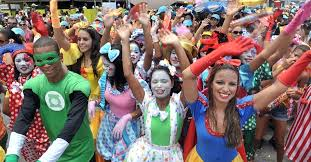
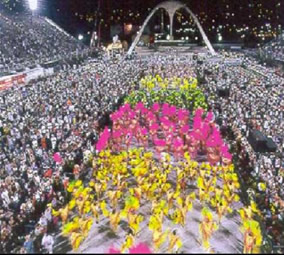
Carnaval is the biggest popular party in Brazil and we are famous worldwide because of this celebration. Most people are familiar with the samba schools (Escolas de Samba) of Rio de Janeiro, but Carnaval goes way beyond Escolas de Samba and it's celebrated in different ways throughout the country.

The days of Carnaval change every year. Just count 7 weeks before Easter Sunday to know when Carnaval is going to be. There are 3 days of the holiday: Monday, Tuesday, and Wednesday, but most people start celebrating it the weekend before, so it's a 5-day party!

Since we are close to Carnaval and it's such an important aspect of Brazilian culture, I created an activity to help you learn more about it.
Enjoy it!

A) PERGUNTAS (use o seu celular para gravar as suas respostas e depois envie a gravação para suporte@elearningforall.org e corrigirei suas respostas)


  1. Você sabe como o Carnaval é festejado no Brasil?
  2. Você sabe o que é a Quaresma e como o Carnaval está relacionado com a Quaresma?
  3. Como se festeja o Carnaval no seu país?

B) VOCABULÁRIO

Você conhece as palavras/expressões abaixo? Escolha a definição correta para cada uma.
(a) extravasar  (b) detonar tudo  (c) enfiar o pé na jaca  (d) a ideia não pegou

___ Explodir, destruir tudo
___ Cometer excessos, exceder os limites, exagerar na dose. 
___ quando alguma coisa não dá certo, não é aceita
___ Demonstrar, expor ou expressar (sentimentos ou emoções); ultrapassar o que é considerado tolerável; exagerar;


C) VÍDEO
Assista ao vídeo abaixo sobre a origem do Carnaval.

1. O que significa a palavra CARNAVAL?
2. O que o significado da palavra Carnaval tem a ver com a festa do Carnaval?

(ver o vídeo completo do Canal Se Liga Nessa História)

D) LEITURA

Como os brasileiros festejam o Carnaval?


O carnaval chegou ao Brasil em meados do século XVII, sob influência das festas carnavalescas que aconteciam na Europa.
Certos personagens têm origem europeia, mas mesmo assim foram incorporados ao carnaval brasileiro como, por exemplo, rei momo, pierrô, colombina.
A partir desse período, os primeiros blocos carnavalescos, cordões e os famosos cortejos de automóveis (corsos) foram criados, mas só se popularizaram no começo do século XX.
O carnaval tornou-se mais popular no decorrer do século XX e teve um crescimento considerável que ocorreu devido às marchinhas carnavalescas. (No final do texto você encontrará uma atividade com uma marchinha)
A primeira escola de samba foi criada no dia 12 de agosto de 1928, no Rio de Janeiro, e chamava-se “Deixa Falar”, anos depois seu nome foi modificado para Estácio de Sá.
A região nordeste permaneceu com as tradições originais do carnaval de rua, como Recife e Olinda. Já na Bahia o carnaval fugiu da tradição, conta com trios elétricos, embalados por músicas dançantes, em especial o axé.
Veja a seguir os Estados que mais celebram o carnaval:
Rio de Janeiro
A folia carnavalesca carioca começa antes dos dias oficiais do carnaval. Já no mês de setembro começam os ensaios nas quadras das diversas escolas de samba da cidade.


No mês de dezembro a cidade já se agita com os denominados “ensaios de rua” e a mais nova criação: “ensaios técnicos”, que levam milhares de pessoas ao Sambódromo todo final de semana. Os desfiles oficiais são realizados durante a data oficial do carnaval.

Pernambuco
Milhares de pessoas saem pelas ruas de Olinda e Recife, a maioria fantasiada e ao som do frevo (ritmo marcante do Estado).


O carnaval de Pernambuco conta com dezenas de bonecos gigantes, os foliões são extremamente animados. Uma das grandes atrações é o bloco carnavalesco “Galo da Madrugada”.


Bahia
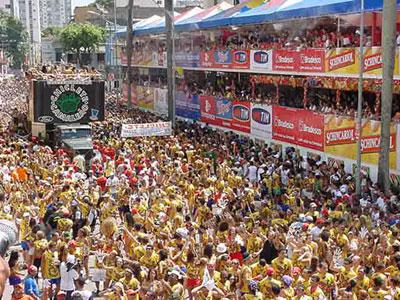
O carnaval baiano é, sem dúvida, um dos mais calorosos e animados do Brasil e do mundo. Em especial na cidade de Salvador, onde se localiza os três principais circuitos carnavalescos: Dodô, Osmar e Batatinha.
Por esses circuitos passam mais de 150 blocos organizados, cerca de 2 milhões de pessoas durante os dias de festa. Normalmente esses blocos se apresentam com os trios elétricos e com cantores famosos.

Texto original: http://brasilescola.uol.com.br/carnaval/carnaval-no-brasil.htm

E) MÚSICA
Escute a marchinha abaixo e complete os espaços da letra.

REFRÃO
Ô balancê balancê
Quero ________ com você
Entra na roda morena pra _______
Ô balancê balancê (2x)

______ por mim você passa
Fingindo que não me vê
Meu _______ quase se despedaça
No balancê balancê

REFRÃO

Você foi _____ cartilha
Você foi _______ ABC
E por isso eu sou a maior ______
No balancê balancê

REFRÃO

Eu levo a vida ________
Pensando só em ______
E o tempo _________ e eu vou me acabando
No balancê balancê

_______________________________________________________________________________

Respostas: 
B) 
b, c, d, a

C) 
1. carnis levale (do Latim) - deixa a carne ser levada.
2. a igreja dizia que antes da Quaresma deveríamos já deixar a carne de lado, mas todos pensavam que como já teriam que passar 40 dias sem beber e comer carne, preferiam aproveitar os 3 últimos dias antes da Quaresma para festejar.

E)
dançar, ver, quando, coração, minha, meu, maravilha, pensando, você, passa