If you like listening to music, then you must use songs to learn languages! Every time we connect a learning experience with something we enjoy doing, we can be sure we are going to have great results. So, today I'm going to propose a 3 Step Activity for you to learn any language on your own with songs. Before we start the activity you have to choose a song you like, your favorite one at the moment. Have you chosen it yet? Don't keep reading if you haven't chosen it yet! I chose the song Thinking Out Loud by Ed Sheeran.
Choose your song!
1- Listen to it on Youtube or wherever you can listen to it. Write down everything you can hear by listening to the song only once. No pauses allowed! It doesn't matter if you can only write 1, 2, 3, 4 or 5 words, this is just a warm-up and the more you do it, the better you get at it.
The picture below shows the result of my first step.
2- Listen to the song again, but this time read the lyrics as you listen. There are many websites where you can find lyrics. Lyrics.com is one of them.
Pay attention to the way the words are pronounced. Are there any words you can't hear? Are there any letters you think are not pronounced?
Check if the words you wrote are actually part of the song. If they are, congratulate yourself, you did a good job! If not, try again and don't ever give up. Maybe the song was too difficult for your level and it would be better to choose a slower song.
3- Use the lyrics and the song now, it's time to listen and sing! Try to imitate the pronunciation of the singer and don't worry if your voice doesn't sound great, all that matters is the pronunciation and rhythm.
You can repeat all the steps as many times as you like with the same song or with another song. I recommend you do it once a week.
This activity is focused on listening and pronunciation, but if you want to learn new vocabulary you can look up all the new words in a dictionary and make a list of the new words from this song.
I hope you liked my activity and that you can learn a lot by using this technique!
I've realized it's tough for some of my students of Brazilian Portuguese to pronounce the sounds of theR and RR correctly.
So, to help them and help anyone who finds those sounds hard to pronounce, I decided to write this article.
First of all, you should know there are 3 types of R sounds in Portuguese.
Strong R (R forte) which sounds like the letter H in "house" (if you speak English), or the letter J in "jamón" (if you speak Spanish)
Weak R (R fraco) which sounds like TT in English as in the word "butter" or like the word "pero" in Spanish.
Silent R (R mudo) when the R is not pronounced or it's slightly pronounced.
Let's see some examples with the Strong R. Read the words below, then click here to listen to my pronunciation.
Rato
Rei
Carro
Macarronada
honra
enriquecer
Notice that the Strong R appears when
letter R is at the beginning of the word, as in the word "rato"
RR - Carro
R is after the letter N, as in "honra"
Now, let's see some examples with the weak R. Read the words below, then click here to listen to my pronunciation.
Brasil
França
Caro
Barato
Carne (in this case there are variations based on the region of Brazil)
Tarde (in this case there are variations based on the region of Brazil)
Favor (in this case there are variations based on the region of Brazil)
Escrever (in this case there are variations based on the region of Brazil)
Notice that the Weak R appears with
R at the end of a word - Favor
R between 2 vowels - Caro
R between a vowel and a consonant - Carne (in this case there are variations based on the region of Brazil)
"BR", "CR", "DR", "FR", "GR", "PR", "TR" e "VR" - Brasil
Regarding the silent R, you should know that it doesn't happen all over Brazil and it usually appears when the R is at the end of a word, mainly with the verbs in their infinitive forms.
Let's see some examples. First read the words below, then click here to listen to my pronunciation.
(I'm from Fortaleza, a city in the Northeast of Brazil and we don't normally pronounce the R at the end of words)
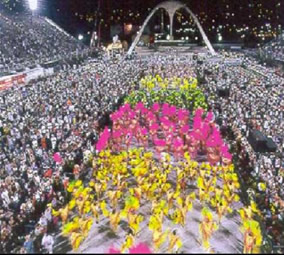
Carnaval is the biggest popular party in Brazil and we are famous worldwide because of this celebration. Most people are familiar with the samba schools (Escolas de Samba) of Rio de Janeiro, but Carnaval goes way beyond Escolas de Samba and it's celebrated in different ways throughout the country.
The days of Carnaval change every year. Just count 7 weeks before Easter Sunday to know when Carnaval is going to be. There are 3 days of the holiday: Monday, Tuesday, and Wednesday, but most people start celebrating it the weekend before, so it's a 5-day party!
Since we are close to Carnaval and it's such an important aspect of Brazilian culture, I created an activity to help you learn more about it.
Enjoy it!
A) PERGUNTAS (use o seu celular para gravar as suas respostas e depois envie a gravação para suporte@elearningforall.org e corrigirei suas respostas)
Você sabe como o Carnaval é festejado no Brasil?
Você sabe o que é a Quaresma e como o Carnaval está relacionado com a Quaresma?
Como se festeja o Carnaval no seu país?
B) VOCABULÁRIO
Você conhece as palavras/expressões abaixo? Escolha a definição correta para cada uma.
(a) extravasar (b) detonar tudo (c) enfiar o pé na jaca (d) a ideia não pegou
___ Explodir, destruir tudo
___ Cometer excessos, exceder os limites, exagerar na dose.
___ quando alguma coisa não dá certo, não é aceita
___Demonstrar, expor ou expressar (sentimentos ou emoções); ultrapassar o que é considerado tolerável; exagerar;
C) VÍDEO
Assista ao vídeo abaixo sobre a origem do Carnaval.
1. O que significa a palavra CARNAVAL?
2. O que o significado da palavra Carnaval tem a ver com a festa do Carnaval?
O carnavalchegou ao Brasilem meados do século XVII, sob influência das festas carnavalescas que aconteciam na Europa.
Certos personagens têm origem europeia, mas mesmo assim foram incorporados ao carnaval brasileiro como, por exemplo, rei momo, pierrô, colombina.
A partir desse período, os primeiros blocos carnavalescos, cordões e os famosos cortejos de automóveis (corsos) foram criados, mas só se popularizaram no começo do século XX.
O carnaval tornou-se mais popular no decorrer do século XX e teve um crescimento considerável que ocorreu devido às marchinhas carnavalescas. (No final do texto você encontrará uma atividade com uma marchinha)
A primeira escola de samba foi criada no dia 12 de agosto de 1928, no Rio de Janeiro, e chamava-se “Deixa Falar”, anos depois seu nome foi modificado para Estácio de Sá.
A região nordeste permaneceu com as tradições originais do carnaval de rua, como Recife e Olinda. Já na Bahia o carnaval fugiu da tradição, conta com trios elétricos, embalados por músicas dançantes, em especial o axé.
Veja a seguir os Estados que mais celebram o carnaval:
Rio de Janeiro
A folia carnavalesca carioca começa antes dos dias oficiais do carnaval. Já no mês de setembro começam os ensaios nas quadras das diversas escolas de samba da cidade.
No mês de dezembro a cidade já se agita com os denominados “ensaios de rua” e a mais nova criação: “ensaios técnicos”, que levam milhares de pessoas ao Sambódromo todo final de semana. Os desfiles oficiais são realizados durante a data oficial do carnaval.
Pernambuco
Milhares de pessoas saem pelas ruas de Olinda e Recife, a maioria fantasiada e ao som do frevo (ritmo marcante do Estado).
O carnaval de Pernambuco conta com dezenas de bonecos gigantes, os foliões são extremamente animados. Uma das grandes atrações é o bloco carnavalesco “Galo da Madrugada”.
Bahia
O carnaval baiano é, sem dúvida, um dos mais calorosos e animados do Brasil e do mundo. Em especial na cidade de Salvador, onde se localiza os três principais circuitos carnavalescos: Dodô, Osmar e Batatinha.
Por esses circuitos passam mais de 150 blocos organizados, cerca de 2 milhões de pessoas durante os dias de festa. Normalmente esses blocos se apresentam com os trios elétricos e com cantores famosos.
E) MÚSICA
Escute a marchinha abaixo e complete os espaços da letra.
REFRÃO
Ô balancê balancê Quero ________ com você Entra na roda morena pra _______ Ô balancê balancê (2x)
______ por mim você passa
Fingindo que não me vê
Meu _______ quase se despedaça
No balancê balancê
REFRÃO
Você foi _____ cartilha
Você foi _______ ABC
E por isso eu sou a maior ______
No balancê balancê
REFRÃO
Eu levo a vida ________
Pensando só em ______
E o tempo _________ e eu vou me acabando
No balancê balancê
1. carnis levale (do Latim) - deixa a carne ser levada.
2. a igreja dizia que antes da Quaresma deveríamos já deixar a carne de lado, mas todos pensavam que como já teriam que passar 40 dias sem beber e comer carne, preferiam aproveitar os 3 últimos dias antes da Quaresma para festejar.
You know when adults ask kids what they would like to be when they grow up? Well, I knew exactly the answer to this question. As a child, I used to say I would to go to Law School and then become a diplomat. It turned out, I did neither of those things, but I have an unexplained passion for Law TV series. For the last couple of months, I've been watching a TV series called The Good Wife and I can't get enough of it. Each episode is better than the previous one. Knowing English is not enough to understand everything being said in this series, there are many legal terms you absolutely must know in order to be able to comprehend every detail of all the complicated cases they have to solve, so I thought it would be useful to create a guide of legal English terms to understand law TV series or if you intend to go to law school in an English speaking country. Legal English Terms Guide
to sue - to take legalaction against a person or organization, especially by making a legalclaim for money because of some harm that they have caused you.
objection - an objection to certain questions or testimony during a trial
overrule - to reject an attorney's objection to a question to a witness
sustain - to accept an attorney's objection to a question to a witness
affidavit - a writtenstatementthat someone makes afterpromisingofficially, to tellthetruth. An affidavit can be used asproofin alawcourt.
alimony - aregularamountofmoneythat alawcourtordersapersontopayto his or herpartnerafter adivorce.
defendant - apersonin alawcasewho isaccusedof having done something illegal
witness - apersonwhoseesaneventhappening,especiallyacrimeor an accident:
leading the witness - asking a question during a trial or deposition which puts words in the mouth of the witness or suggests the answer, which is improper questioning
To keep things real, I created a video with 7 scenes in which legal English terms are used in films, series or the news. Hope you like it!
Hi everyone! First of all, I'd like to apologize to my students of English because I haven't posted any English activities here in a long time. I promise the next post will be about English. Since teaching Portuguese is something I have been doing for only a couple of years, there are many discoveries in the process and I can't wait to share them. I was recently in Brazil in the state of Santa Catarina where lots of Argentinian people go to during the summer because Brazilian beaches are marvelous and it's not that far from Argentina. Anyways, I was talking to an Argentinian friend who is learning Portuguese and he said he had many questions he wished to ask me, but he didn't want to bother me on my vacation. I told him it was a pleasure to help him because teaching is my passion, so it doesn't feel like work. His most difficult question was regarding the possessive pronouns. He didn't understand why we sometimes say "meu" and other times say "minha". I explained to him that in Portuguese the possessive pronouns usually agree with the object that is owned and I gave him a few examples: Essa mochila é minha = This backpack is mine Essa é a minha mochila = This is my backpack Esse livro é meu = This book is mine Esse é o meu livro = This is my book Then, I told him that "mochila" is a feminine word, therefore we use the possessive pronoun in its feminine form - MINHA and that "livro" is a masculine word, so we use the possessive pronoun in its masculine form - MEU. What I didn't tell him is that the possessive pronouns can also agree with the person who owns the object, so let me explain the whole story about the possessive pronouns in Portuguese! 1. They can agree with the person who owns the object. 2. They can agree with the object that is owned. First, check out the table below to learn all the possesive pronouns.
Rule #1 The pronouns dele, dela, deles and delas are always used after the object that is owned and they agree with the with the person who owns the object. Examples: - Essa é a casa da minha mãe e do meu pai. Eu amo a casa deles. = That is my mother and my father's house. I love their house. - Aquele é o carro da Cláudia. Eu gosta muito do carro dela. = That car is Claudia's car. I really like her car. - Este é o filho do Marcelo. Ele é um menino muito legal. Todo mundo gosta do filho dele. = This is Marcelo's son. He is a very nice boy. Everybody likes his son. Rule #2 All the other pronouns agree with the object that is owned. Examples:
- Minha casa é verde e branco. = My house is green and white.
- Nossa casa é azul e branco. = Our house is blue and white.
- Meu carro é vermelho. = My car is red.
- Nosso carro é preto. = Our car is black.
Observations
I) The use of the articles a, o, as, os before the possessive pronouns is optional.
Examples:
- A minha mãe é maravilhosa. = My mom is wonderful.
- Minha mãe é maravilhosa. = My mom is wonderful.
- O meu pai é maravilhoso. = My dad is wonderful.
- Meu pai é maravilhoso. = My dad is wonderful.
II) The possessive pronouns seu, seus, sua, suas can be used to refer to your (yours), his,her (hers) and their (theirs) causing ambiguities, because you don’t know if the pronoun is referring to you or to other person.
Example:
- Maria não encontrou seu amigo. Maria did not meet your/her friend.
(This sentence generates some confusion because you don’t know if the person is referring to your or her friend. If the person is referring to her friend is better to say:Maria não encontrou o amigo dela. Maria did not meet her friend. )
I believe it's extremely important to learn about the culture of the country where the language you are learning is spoken and since Christmas is coming I thought it would be nice to teach you some vocabulary related to Christmas in Brazilian Portuguese, so let's dig in.
First, you will listen to the vocabulary. Then, you will read a text about Christmas traditions in Brazil and finally you will answer some questions about the text.
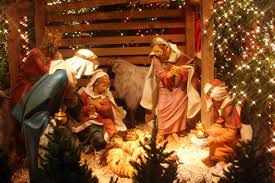
No Natal comemoramos o nascimento do menino Jesus, mas esse significado às vezes fica um pouco esquecido.
No dia 24 de dezembro à noite servem a ceia de Natal, que não pode faltar o peru, o chester, a rabanada, tender e bolinhos de bacalhau (herança portuguesa).
Outro costume do brasileiro no Natal é reunir a família para um grande almoço no dia seguinte com o que restou da noite anterior e acrescentando algumas coisinhas a mais. (Na minha família chamamos os restos de comida de "já te vi" porque já vimos essa comida na noite anterior)
Na madrugada do dia 24 para 25 as crianças ficam à espera do Papai Noel, que na sua imaginação, chega num trenó com nove renas e um saco vermelho grande com muitos presentes. Muitas crianças escrevem cartinhas para o Papai Noel.
Já é tradição dos Correios no Brasil escolher algumas cartinhas de crianças carentes e entregar pessoalmente o presente à criança que escreveu a cartinha.
Na época de Natal várias empresas se reúnem em algum restaurante, bar, casa de eventos para troca de presentes e brincadeiras de amigo secreto. Isso acontece também entre amigos.
Outra coisa muito comum no Brasil é montar árvores de Natal e Presépios de vários tamanhos e modelos, em igrejas, parques e nas casas.
No Brasil também é época de visitar abrigos de idosos, creches, orfanatos e albergues para levar comida, brinquedos ou apenas dar um abraço a quem não tem familiares por perto. No Natal as pessoas ficam mais sensíveis a trabalhos voluntários.