Mostrando postagens com marcador learn spanish online. Mostrar todas as postagens

sexta-feira, 28 de abril de 2017

How To Expand Your Vocabulary When Learning A Language


When we learn a new language the most important thing to learn is vocabulary! You can argue that grammar is very important, too, but if you know lots of grammar and don't know many words, you won't be able to express yourself.
In order to help you expand your vocabulary, today I am going to teach how to build vocabulary lists.

The first thing you should do is get a notepad, a small one that you can take it with you anywhere you go. Rule number one of having vocabulary lists is that you have to review the lists over and over again, otherwise you won't learn the words, so you must have your notepad at hand to be able to study anytime, anywhere. (you can use your cell phone if you don't want to carry a notebook)


The second thing you should do is think about why you are learning the language. Is it because of your work, because of a trip, because of an exam or just because you like the language?
This information is going to help you choose the topics of your lists. Say you are learning the language because you work with logistics and you need to speak the language at work. Then, you should make lists of words that are related to logistics, such as "talking to a supplier about an order", "giving a presentation"... you know what you need, so you are the best person to organize your lists.
You can organize your list in adjectives, verbs, nouns, adverbs, but try to be more specific, for example, verbs used to talk about routine, adjectives used to describe feelings…

Each list shouldn't have more than 10 words. If a list is too long, you might have a hard time learning them.

Third, once your list is ready you have to organize your schedule to study it. The day you make it, spend a few minutes studying their pronunciations and meanings, also write sentences with each word. (Clicking here, you can access an online dictionary, choose the language you are learning, check the meaning of the words and also listen to their pronunciations.)
Set up an alarm on your phone for you to review the words one week later. This time, create new sentences and read them out loud. Set up a new alarm to review them one month later. Check if you still remember them. If not, set up a new alarm to review them next week. If you do, excellent work, they will be a part of your active vocabulary!

If you are an upper-intermediate or advanced student, read articles about topics you know nothing about and create lists with the new words you learn from those articles. When you reach this level, your goal is to be able to talk about anything in the language you are learning, not just the things you know and like.

Hope this tip is useful and it helps you acquire new vocabulary!

quarta-feira, 12 de abril de 2017

How To Learn A Foreign Language As An Adult


Learning a foreign language as an adult is definitely harder and much more time-consuming. I learned Spanish as an adult and today I want to share with you, my experience in the hopes it will help you with your learning process.


I first started learning Spanish on a website called Spanishdict.com. They offered mini video lessons, flashcards, and online activities. I loved learning through that website because I could see the new vocabulary over and over again and that helped me retain the new words.
However, after a couple of months, I got bored of learning the same way every day. There was no room for flexibility or creativity, I would watch the videos, do the online interactive activities and that was it. Besides, I had no one to answer my questions, so it was very frustrating.


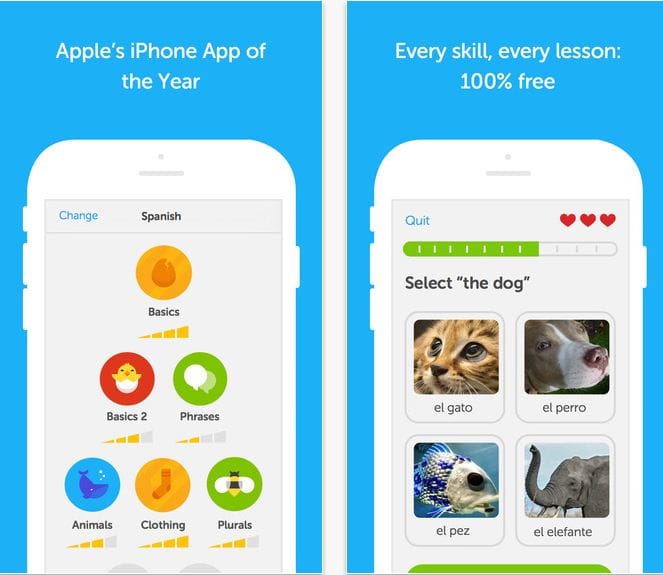
I know there are apps nowadays, such as Duolingo, that connect their users in a community and people help each other out. This is an awesome tool because you don't feel alone in your learning process and it's a lot more entertaining.


My second step was to find a Spanish course that I could afford in my town. I took 4 months of classes in a group and I had such a great time learning along with my classmates. We would meet on the weekends to practice conversation. I did all the homework my teacher assigned and I studied at least 3 times a week, even if it was just for 10 minutes.


When my trip to Argentina approached, I thought it was important to improve my Spanish level in a short period of time, so I hired a private teacher and started having 2 classes a week of 2 hours each. We usually had conversation classes and at home, I studied grammar and did several exercises related to verb tenses, conjugation, and vocabulary. If I had questions, I made notes about them and asked my teacher during our lessons. Though I was working at the time, I would always find time to be in contact with Spanish. When I was driving to work, I would listen to songs in Spanish or to the CD that came with my Spanish book. In my head, I created dialogues that I thought I might have when I arrived in Argentina. I would dissect song lyrics in order to learn pronunciation and acquire vocabulary. Spanish was my life!


I got to Argentina for a 4-month Spanish course and I was placed in an intermediate group. My teacher was one of the best teachers I've ever had. She was extremely committed, was always on time and ready to teach wonderful lessons. All our learning process was based on Argentina's culture. We studied through their breath-taking Tango songs, their clever films and lots of news from magazines and newspaper.
Of course, it's much better to learn a language where it is spoken and I took advantage of that. I would not miss an opportunity of speaking to native people. A simple visit to a drugstore was worth 1 hour of class :-)
I met my now husband in Argentina and being with him and his family has definitely helped me a bunch, I even picked up his accent, but if you aren't as lucky as I was, don't worry, you can still learn.

In summary, I believe all the steps I took helped me achieve fluency in Spanish and if you want to be fluent in any language you can't do things halfway, you must commit 100% to your learning process. Keep in mind your brain is not the same as it used to be when you were a child, you have to work harder, if a child studies 2 hours a week, you have to study 6.
You will certainly feel frustrated at times, but don't give up, it's totally worth it. You will be jumping up and down like a child when you are finally able to understand what's been said in a song or a film or when you can carry on a conversation.
Now, go get started, there is no time like now! 


terça-feira, 15 de janeiro de 2013

Special Post- Cuenca, the world's best place to retire

This is a special post since it doesn't talk about any expression or activity to learn English.
I'll tell you a little bit about a place, which has been labeled as the World's Best Place to Retire, Cuenca.
Then I'll raise some questions about learning a foreign language.

Cuenca is located in Ecuador and is the capital of the province Azuay, it is approximately 9 hours south of Quito.
The weather is pretty much the same all year-round. The average daily temperature is 58 degrees Fahrenheit (27 degree celsius) and there are only 2 seasons: rainy and dry. The heaviest rains come in March, April and May.

But why am I talking about this place? Well, first of all I heard of this place from a friend of my mom's. She lives in the United States and like many Americans she would like to live there when she retires. So, I got curious and decided to discover what is so appeling about this town.

An american retiree said this in a NYTimes article:
“The weather is nice. The cost of living is very low. Public transportation is very good,” said Mr. Evans, who lives in an apartment south of the city center. “I really love to walk and don’t need a car.”       

Another feature described in the same article is that in Cuenca you can find a large number of English-speaking doctors and English language bookstores.
(here is the link to this article)

After that I read another article sent by my mom's friend called "What Cuencanos say about gringos: they enrich the local culture, bring more business but need to learn Spanish".
One opinion caught my attention:
"When I lived in New Jersey, the locals would tell the Hispanic people that they needed to learn English if we wanted to live in the U.S. I agreed and learned their language. It seems that many of the gringos who live in Cuenca do not agree and do not make much effort to learn Spanish.” –Moises C.
(the second article)

This got me thinking about the fact that English is such an international language that the people who are native speakers of that language don't bother learning others. Of course, this is a generalization!
So, my questions is: if you move to another country shouldn't you learn their language?
I believe that when you are in another country and you don't speak the langauge, you lose many opportunities of really getting to know people and understanding their culture.

Get ready to fully enjoy the culture, maybe meet the love of your life or become the next best selling writer in Spanish. How about that? If you are planning to live in Cuenca or any other place, LEARN their language.
You don't even have to leave your home to do that. You can learn Spanish through Skype. I don't teach it (I speak it though because I live in Argentina, but I'm brazilian) , but on my website you can choose the best teachers for you. Skype Classes Luisa

Also here I leave 2 websites where you can get more information about Cuenca and also a link to a promotional video of the city:
http://www.gringosabroad.com
http://www.gringotree.com/cuenca/
http://www.youtube.com/watch?NR=1&v=vwj6nzdBclw&feature=endscreen